The 84 Ghats of Kashi, Explained: Where to Bathe, Board and Simply Sit
Varanasi’s riverfront is one long stone staircase with 84 names. Here is how the arc runs from south to north, which five ghats make up the Pancha Tirtha, and where to bathe, board a boat, or just watch the city wake up.
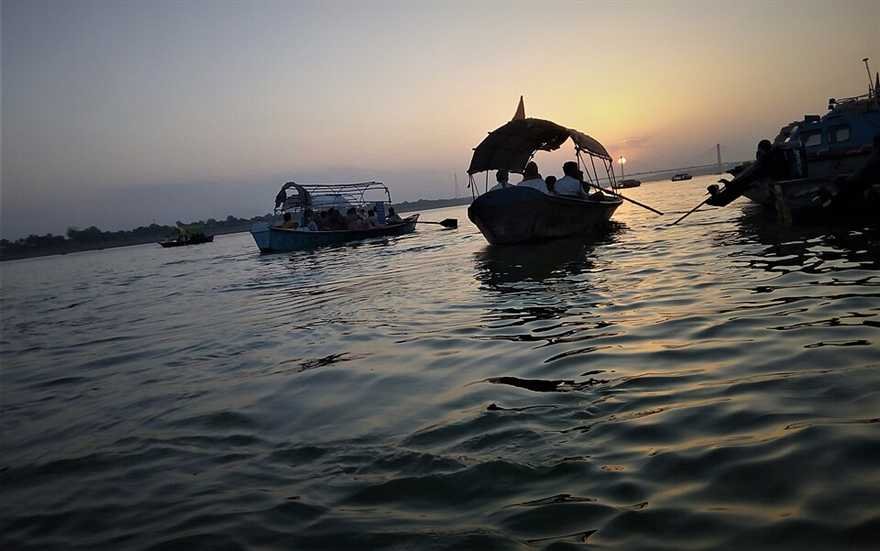
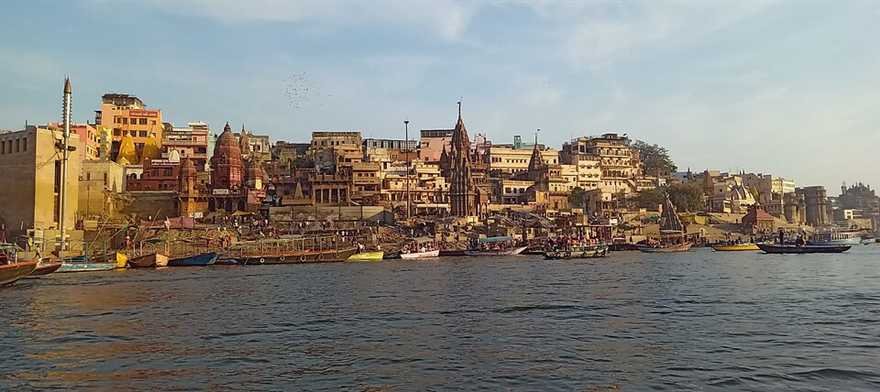
Stand on a boat mid-river and Kashi resolves into a single sweep of stone: roughly six kilometres of steps, palaces, temples and shrines stacked shoulder to shoulder along the western bank of the Ganga. The city faces east, towards the rising sun, and the river here bends to flow south to north — a direction the tradition treats as specially auspicious. Everything you have heard about Varanasi happens somewhere on these steps.
Why 84? Honest answer: the number is as much symbolism as census. Ghats have been merged, rebuilt and renamed over centuries, but 84 stuck — one popular explanation ties each ghat to one lakh of the 84 lakh births a soul is said to pass through. Count them yourself from a boat and you may land on a slightly different number. Nobody in Kashi will mind.
The southern end: Assi to Kedar
Assi Ghat anchors the southern tip, where the little Assi stream meets the Ganga. It is the most spacious, most relaxed ghat — morning yoga, a daily dawn aarti and music programme, chai stalls, students from the nearby university. If the old city feels overwhelming, Assi is where you breathe.
Walking north you pass Tulsi Ghat, remembered as the home of the poet-saint Tulsidas, who worked on the Ramcharitmanas here, and then Harishchandra Ghat — the smaller of the city’s two cremation grounds, named for the truth-bound king of legend. Further on, Kedar Ghat announces itself with red-and-white stripes; its Kedareshwar temple draws a devoted stream of Bengali and South Indian pilgrims, and its steps are a fine, less-crowded place for a morning dip.
The busy middle: Dashashwamedh and its neighbours
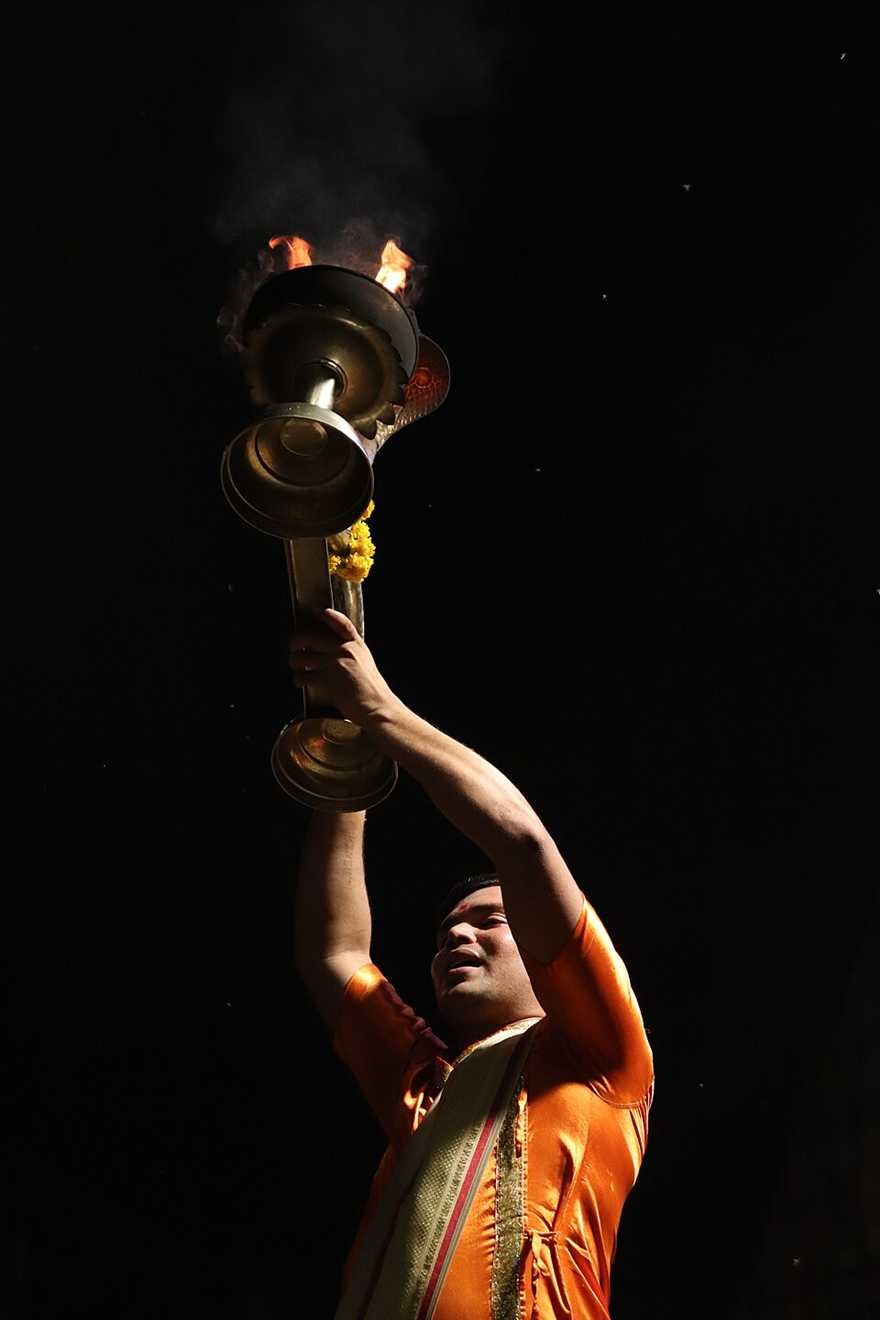
Past the riverside fort of Chet Singh Ghat and the grand palace facade of Darbhanga Ghat, you reach the beating heart: Dashashwamedh Ghat, where legend says Brahma performed a ten-horse sacrifice. This is where the famous Ganga aarti happens every evening, beginning shortly after sunset — the exact hour shifts with the season, so check locally on the day.
Next door, Man Mandir Ghat carries a Rajput palace and the stone instruments of an eighteenth-century observatory, and Lalita Ghat, with its Nepali pagoda temple, is now the river gateway into the Kashi Vishwanath corridor.
The sacred north: Manikarnika to Adi Keshava
Manikarnika Ghat is Kashi’s great cremation ground, where the fires are said never to go out. It is not a spectacle — keep your distance, put the camera away completely, and leave the space to mourners. Beside it leans the half-submerged Shiva temple of Scindia Ghat, tilted into the water since the ghat’s nineteenth-century reconstruction.
Panchganga Ghat, where belief says five rivers meet, is one of the city’s oldest sacred sites, with the Alamgir mosque rising above it. The arc ends near the Varuna confluence at Adi Keshava Ghat, where tradition says Vishnu first set foot in Kashi.
The Pancha Tirtha
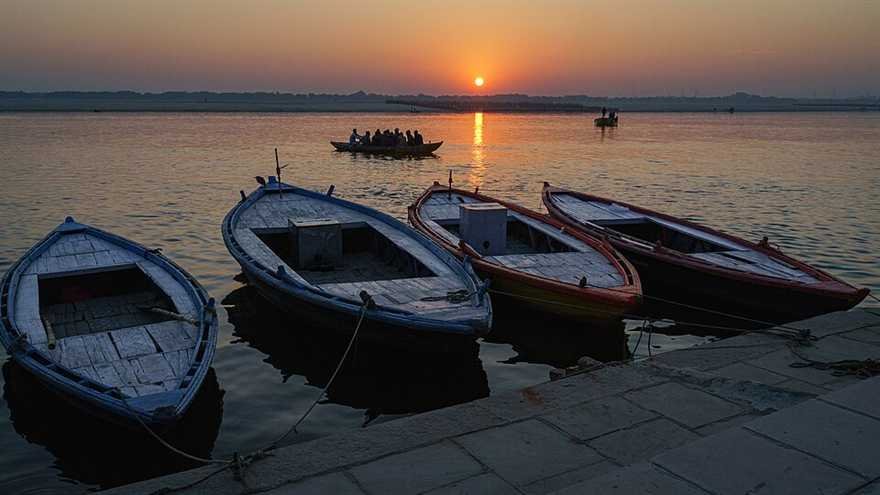
Pilgrims who want the classical Kashi experience bathe at five ghats in a fixed order in a single day: Assi, Dashashwamedh, Adi Keshava, Panchganga and finally Manikarnika. Many hire a boat for the day to do it; a good boatman knows the sequence by heart.
Quick answers
- Where to bathe: Assi, Dashashwamedh and Kedar have the most activity and oversight; go in the morning, use the marked bathing stretches, and keep valuables with a companion on the steps.
- Where to board a boat: Assi and Dashashwamedh are the main boarding points with the most boats; quieter departures are possible from ghats in between — your captain will send a pin.
- Where to simply sit: Assi at dawn with chai; the wide steps around Darbhanga and Munshi ghats at dusk; almost anywhere in the north stretch for solitude.
- Etiquette: dress modestly, ask before photographing people, and treat the two cremation ghats as the funerals they are.
The ghats reward slowness. Walk one stretch, boat another, and leave a morning unplanned — Kashi fills it for you.
The ghats read best from the water
Sunrise rows, aarti-front anchors and the full 84-ghat arc — with a captain who knows every stone.